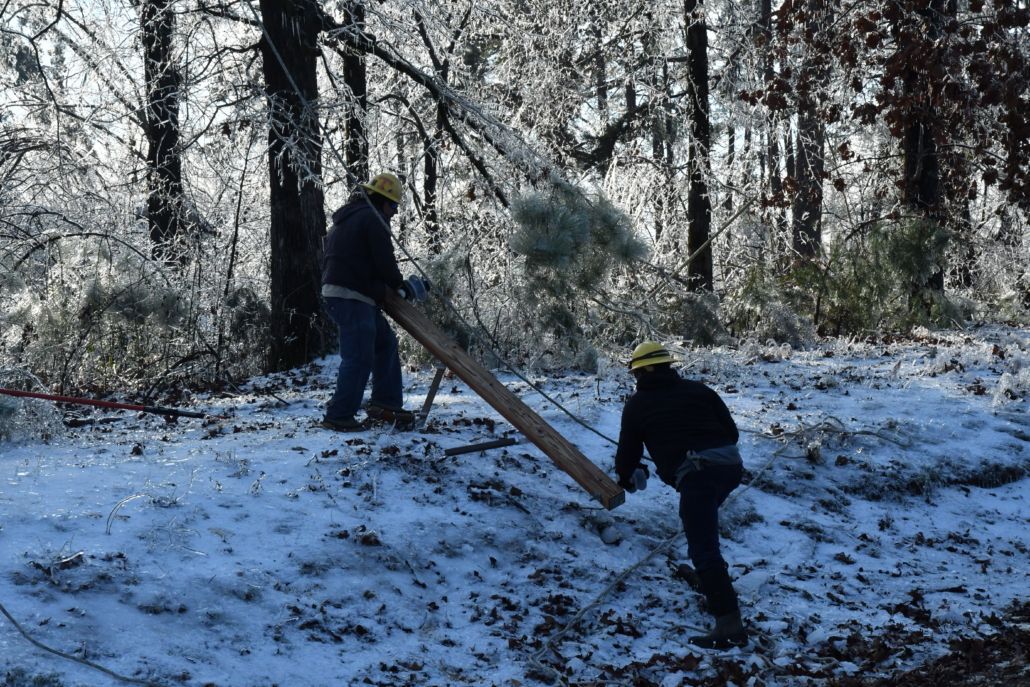
It’s easy to forget that the excitement of a potential “snow day” is not shared by everyone. Winter storms are felt differently depending on where you stand. When news of Winter Storm Fern first began to circulate, many of us debated whether it would amount to much at all—whether we’d “actually get any snow,” or whether the warnings would quietly fade away. For our local power companies (LPCs), though, there is no room for debate. Preparation begins long before the first snowflake falls. Crews mobilize. Capacity is recruited. Logistics are coordinated—meals, lodging, equipment—on the assumption that the storm will come, and that its impact could be catastrophic for the communities they serve. As Winter Storm Fern made her way across the Tennessee Valley, what unfolded in the weeks that followed was nothing short of remarkable. The storm itself was a spectacle – both terrifying and beautiful. In its aftermath, we saw images of deep snowbanks, children sledding, and intricate ice formations clinging to trees and fences. But those of us in the energy industry understand the other side of that beauty—the weight of ice on lines, the strain on equipment, and the fragile balance that keeps electricity flowing. Once again, we were reminded that society moves at the pace of electricity. In the days after the storm passed, we witnessed something even more powerful than the weather itself: the best of our humanity. The people we are proud to work alongside woke up day after day, coffee in hand and hot stick over their shoulder, ready to face whatever challenge waited beyond the truck door—all so that power, and a sense of order, could be restored. Was the work harder than expected? Probably. Did it reaffirm what it means to put service above self? Without question. While many of us remained sheltered at home, LPC crews from across the Valley stepped up. They melted the storm inch by inch, knocking ice from lines and equipment so electricity could move again without the crushing weight pulling it back down. They followed the sound of silence, tracing outages through snow-buried lines until they found a snapped conductor lying quiet in a ditch. Bucket trucks crept through ice-locked streets, their booms lifting linemen into sleet-soaked darkness to replace shattered crossarms and transformers split by the cold. The grid returned not all at once, but by touch—each repaired connection passed hand to hand through crews spread across miles of frozen ground. As Mike Partin, President of the National Rural Electric Cooperative Association (NRECA) and President & CEO of Sequachee Valley Electric Coop, recently shared, “It’s more than a principle on paper—it’s a promise we live out when disaster strikes. These men and women leave their own families to help other families. They go wherever they’re needed, whenever they’re needed, without hesitation.” And they were not alone. Businesses across the region stepped in as well, delivering hot meals—Taco Bell, Chick-fil-A, the unmistakable fuel of long days and longer nights. Electricity and kindness—two commodities that can feel in short supply—were both restored through collective effort. Moments like these force us to pause and reflect on the grit, resilience, and stamina that make our communities strong. Sometimes, Mother Nature reminds us not only of our vulnerabilities, but of our better angels. Today, homes are warm. Restaurants are open. Kids are back in school. Life has returned to something resembling normalcy—because of the unity, sacrifice, and hard work of LPCs across the Tennessee Valley. So we wanted to take a moment to simply say: Thank you.
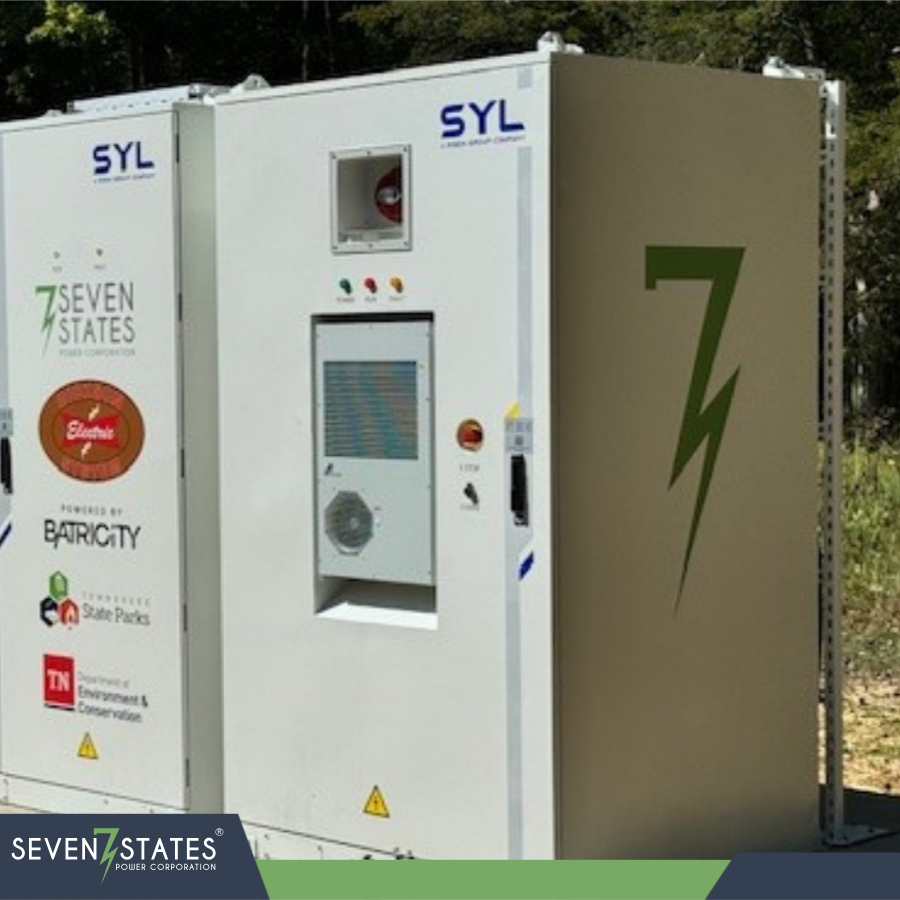
Seven States continues to deploy battery energy storage system (BESS) projects and advance regional infrastructure initiatives. Recent projects—including the Montgomery Bell State Park (MBSP) installation—have provided valuable lessons that are shaping our approach moving forward. From operational insights to market signals, these experiences are informing how we deliver value to our member utilities. 1. Experience Our experience at MBSP confirmed that integrating battery storage into existing electric systems is well within current technical capabilities. The greater challenge lies in managing the additional workload alongside the daily priorities of utilities. Capturing lessons learned with each installation and applying them at scale to future projects allows each deployment to benefit from the last by reducing costs and increasing speed. 2. Performance tracks expectations To date, system performance at MBSP has been reliable, with no material operational issues. Financial results are also aligning with projections, reinforcing confidence in the technology itself. The primary risk areas are: forecasting peak demand and scheduling dispatch accurately to capture expected value—an operational nuance that becomes increasingly important as storage portfolios grow. Demand reduction assets are best served to be installed at reliable grid locations, which tend to be distribution substations, to minimize operational downtime due to extrinsic factors. 3. Integration impacts performance While standalone battery controllers can manage basic operations, deeper system integration delivers meaningful benefits. In particular, SCADA integration can significantly reduce the risk of missing peak events by improving visibility and responsiveness. This lesson is informing how Seven States designs future BESS projects, ensuring storage assets are fully integrated into utility operations rather than standalone resources. 4. Interest in BESS is growing Across the region, the market for battery storage and Reliability as a Service is shifting from early skepticism to informed curiosity. Utility interest continues to rise, though many are waiting for greater clarity before moving forward. Key sources of hesitation include uncertainty around TVA rates, evolving TVA programs, and open questions related to federal tariffs and tax policy. As these issues come into focus, we expect interest to translate into action. Together, these takeaways are guiding Seven States as we advance upcoming BESS projects and broader infrastructure initiatives. By applying proven lessons, prioritizing integration, and maintaining a regional focus, we are building a more resilient and flexible energy future for the communities we serve.
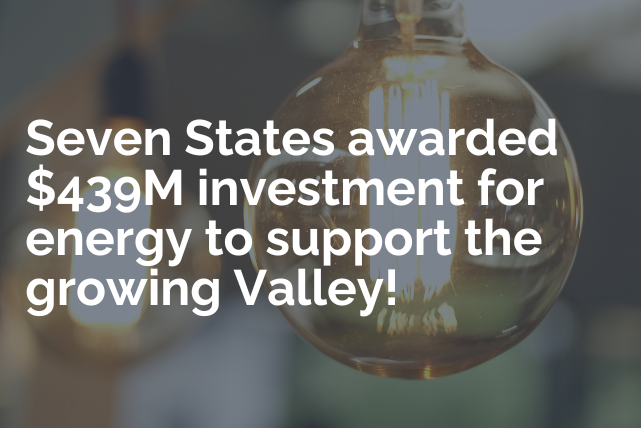
Chattanooga Times Free Press | 15 Feb 2026 | BY SEVEN STATES POWER CORPORATION BOARD OF DIRECTORS Demand for energy is climbing while extreme weather events like Winter Storm Fern and Winter Storm Elliott continue to challenge an already constrained electric system. Fortunately, there is a ready-now solution. Seven States Power Corporation is a cooperative designed to help meet demand for affordable, abundant and reliable power. Since the 1930s, the Tennessee River Valley has thrived under a vital network of the wholesale power provider — the Tennessee Valley Authority — and the electric utility customers that together form the public power model. More than 150 electric utility customers distribute affordable energy across a seven-state region of Tennessee, Alabama, Georgia, Mississippi, Kentucky, Virginia and North Carolina. In 2007, TVA and the electric utilities joined forces to form Seven States as an in-valley solution to finance power assets, expand energy production and modernize infrastructure. THE ‘IN-VALLEY’ SOLUTION Seven States is a nonprofit generation and transmission cooperative headquartered in Chattanooga. It is member-owned by the electric utility customers of TVA across the seven-state region. The cooperative is uniquely positioned to operate outside established debt constraints and regulatory limitations that restrict other entities. This means Seven States can own large power plants and transmission towers, which frees up debt for TVA to build and operate more power supply. When the electric utility customers collectively own assets through Seven States, it also ensures that rates in the region remain affordable. This flexibility allows Seven States to move quickly to supplement the valley’s energy needs with reliable sources of power. In January 2025, Seven States was awarded $439 million by the U.S. Department of Agriculture, consisting of a zero-interest loan and grant to build new capacity. The first initiative under this award is a utility-scale power project that will enhance grid stability and reliability, benefits that can be shared across the valley. Where demand for capital and power are soaring, Seven States makes it happen. Seven States has a proven history of filling critical gaps when needed. One of its earliest projects with TVA was financing a large power asset — an 800-megawatt gas plant located in Southaven, Mississippi. By partnering with Seven States, the energy sector can nearly double its capital investment to accelerate generation projects. Where finances are constrained, Seven States makes it happen. In addition, Seven States has stepped up to deliver distribution technologies that bridge the past, present and future of a modern energy grid. With projects deployed across the valley at the U.S. Space & Rocket Center in Huntsville, Alabama, Dollywood Parks and Resorts in Pigeon Forge, Montgomery Bell State Park in Burns, Tennessee, Rock City in Lookout Mountain, Georgia, and the National Corvette Museum in Bowling Green, Kentucky, and with more than 500 electric vehicle chargers installed to date, Seven States has proactively advanced infrastructure to support economic development across the region. Where innovation and infrastructure are needed, Seven States makes it happen. In July 2025, the Seven States Board of Directors — representing 17 major electric utilities that purchase power from TVA — unanimously passed a resolution affirming Seven States as an additional supplier of abundant, reliable energy within the valley. By advancing an in-valley solution owned by the customers, the public power model can thrive and evolve from within, guided by those who know the region best. Seven States has built a foundation for the energy future through its cooperative structure and access to affordable capital. It represents a real opportunity to expand power production and light the way for prosperity across the Valley.